.png)
Four rules for less money stress
The magic is in the method. Follow these four simple rules and change your relationship with money.

Change your money mindset
The YNAB app doesn’t work because it’s pretty (it is, though) or because it has amazing tech (it does, though). It works because it’s built around four rules designed to change your financial future.


rule one
Give Every Dollar a Job
Show your money who’s boss and spend with confidence.

How Rule One works
Every time you get paid, ask yourself, “What do I need this money to do before my next paycheck?” and assign every dollar you have available to an expense category until there are zero “unemployed” dollars left.

Step 1
Get some dollars.

Step 2
Decide what those dollars should do.

Step 3
Follow your plan.

Why it works
You’ve already mapped out a plan, so instead of stressing over every little (guilt-inducing) spending decision, you’re just following your own instructions. No raise, windfall, or inheritance required. (Though all of those would still be nice.)

rule two
Embrace Your True Expenses
Transform large or infrequent expenses into something more manageable.

How Rule Two works
Future-proof your finances by anticipating large, non-monthly expenses (they’re going to happen!) and breaking them down into smaller, manageable chunks of monthly saving instead.

Step 1
Find a big, infrequent expense.
.svg)
Step 2
Create a target to fund it monthly.
.svg)
Step 3
When that expense arrives, just pay it!


Why it works
Holiday shopping, home repairs, and annual insurance premiums are a fact of life. Turning those big, scary expenses into smaller monthly bills helps you make fully-informed spending decisions...and allows you to sleep a little easier.

rule three
Roll with the Punches
When you overspend in an expense category, just adjust. No guilt necessary.

How Rule Three works
If you run out of money in one category but still need (or want!) to make a purchase, just move money from another category to cover it. No shame or guilt needed—it’s your money and you can spend it how you want.

Step 1
Choose a category with overspending.

Step 2
Move funds from another category to cover it.

Step 3
Move on with your life—no guilt!


Why it works
Plans change. Managing your money shouldn’t feel punitive or restrictive. You’re the one who decides what your dollars should do and you’re free to change your mind at any time!

rule four
Age Your Money
Increase the time between when you earn your money and when you spend it.

How Rule Four works
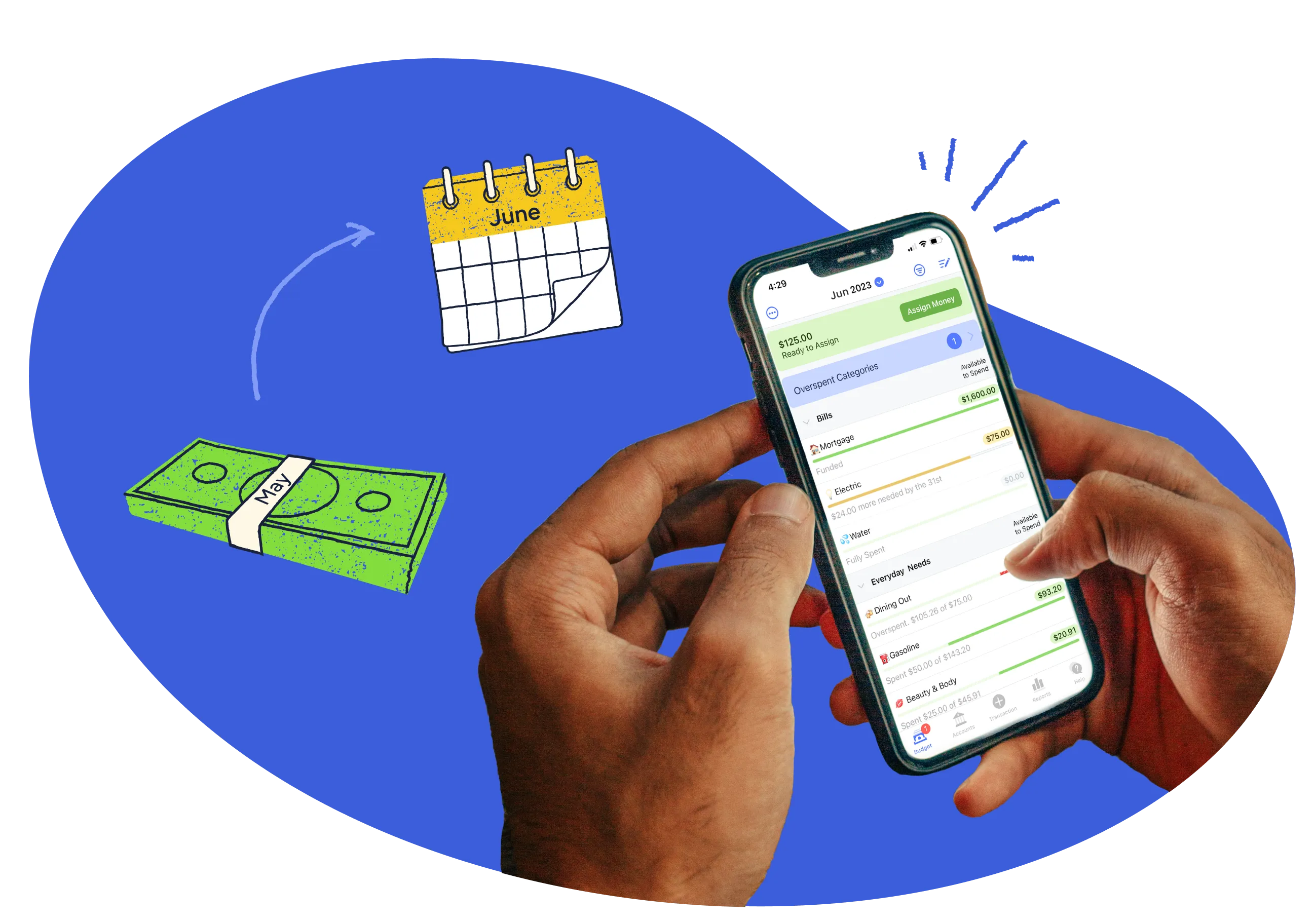
As your awareness about money grows, you’ll naturally start spending less. Eventually, you’ll be paying bills with money you earned more than thirty days ago. The end result is more breathing room in your financial plan.

Step 1
Be purposeful in your spending.

Step 2
Consistently spend less than you earn.

Step 3
Watch that Age of Money grow!

Why it works
When you are spending money you earned last month, you create a built-in buffer. One day you’ll replace that pile of bills waiting on money with a pile of money waiting on bills (or something more fun, like annual theme park passes!)
Flip the cards to reveal your financial fortune with the four rules

Rule one
Give Every Dollar a Job
With Rule One you will…

Rule Two
Embrace Your True Expenses
With Rule Two you will…

Rule three
Roll with the Punches
With Rule Three you will…

Rule four
Age Your Money
With Rule Four you will…

Master the method
We’ve got the rules and the resources! Learn more about taking total control of your finances by reading our book or watching a free video course.





A magic method for money management
The easiest way to practice the four rules is with the YNAB app!
